
Artificial Intelligence, Salesforce Admin, Security, SMB
7 July 2026

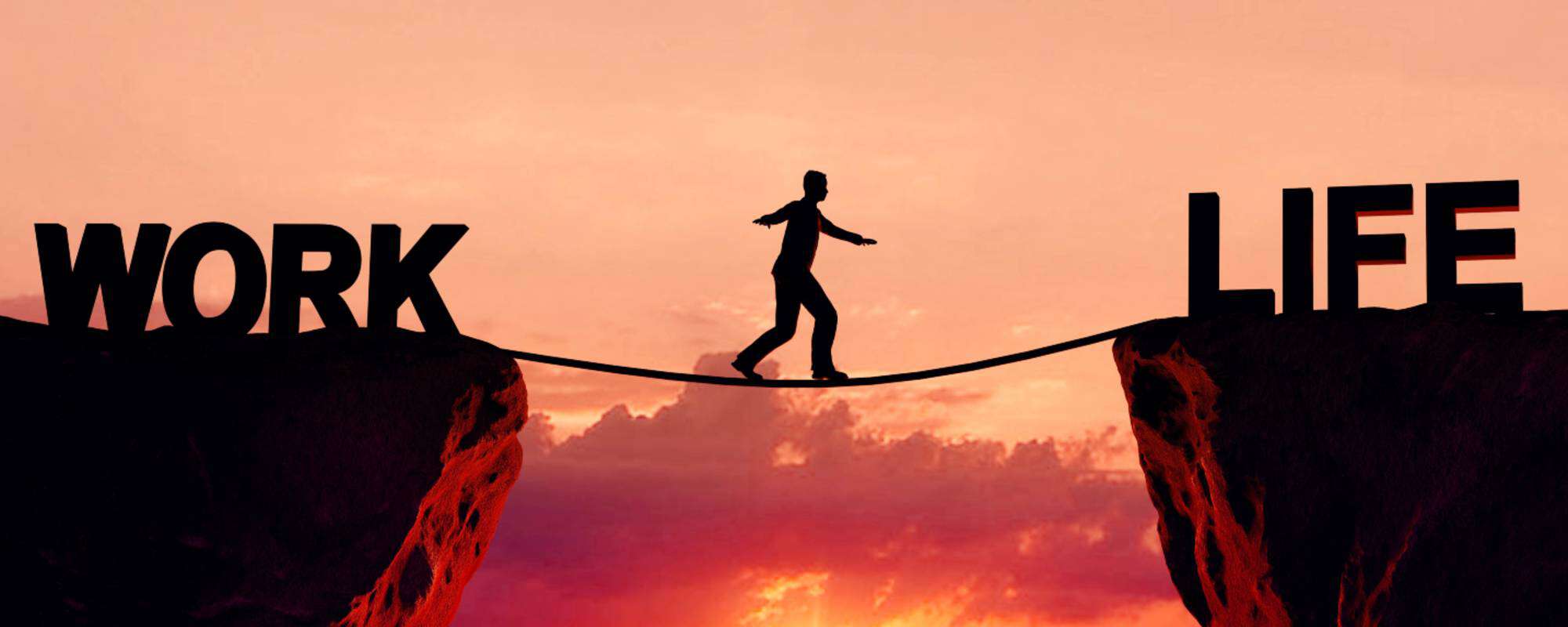
There is a story doing the rounds at the moment: that AI in Salesforce is coming for the Admin’s job. It is tidy, a little dramatic, and almost entirely wrong. The Admin is not disappearing. The work is not vanishing. Something quieter, and far more consequential, has happened instead.
Over roughly twenty years, Salesforce evolved from a single CRM application into one of the broadest business platforms in enterprise software. Nothing disappeared. Salesforce simply added capability, release after release, year after year. The job title stayed the same. The job did not.
For the businesses that depend on the platform, particularly small and medium-sized organisations, this matters enormously. Because while Salesforce quietly expanded into a multi-discipline platform, the expectation that one person could own all of it largely stayed put. This is an article about that gap, what it is doing to the people in the role, and how thoughtful organisations might respond.
It helps to start with the product, not the person. When Salesforce launched its no-software CRM in 1999, an Admin’s world was bounded and knowable. You managed users, built reports and dashboards, arranged page layouts, created custom fields, set up a few workflow rules, and ran the occasional data import. It was real skill, but it was a single discipline, and one capable person could realistically own the entire platform end to end.
Then the platform began to accumulate, and crucially, each layer asked the Admin to be more technical than the last. AppExchange arrived in 2005, bringing third-party apps and integrations that someone now had to govern. The move to Lightning Experience in 2016 re-architected the interface and the build model, nudging Admins toward component and developer-adjacent thinking. Flow became the automation standard from 2019. And because Workflow Rules and Process Builder reach end of support at the close of 2025, even the most clicks-based Admins have climbed the technical ladder. Multi-factor authentication became mandatory in 2022, putting security and permission-set strategy squarely on the Admin’s desk. Then Agentforce, Salesforce’s framework for autonomous AI agents, landed at Dreamforce in September 2024, adding AI governance to the list. No single release transformed the role. The climb was cumulative, and that is precisely why it went largely unremarked.
The platform did not get simpler with maturity. It got deeper. And the role quietly inherited the depth.
The clearest way to see the shift is to put the two versions of the role side by side. On the left, the Admin of the platform’s early years. On the right, the disciplines a modern Salesforce Admin is now routinely expected to understand. Look at the difference in volume, not the individual items. That difference is the whole story.
Salesforce’s own framing reflects this. The official Admin Skills Kit now defines fourteen core skills for the role, spanning user management, security, business analysis, data management, process automation, change management and more. That is not a checklist for a single specialism. It is a description of several professions stitched into one job description.
If the scope of a job expands for two decades while the title, and often the recognition, stays the same, you would expect the people in it to feel the strain. The data suggests they do.
It would be easy to read these numbers as a verdict on Salesforce. They are not. The platform remains extraordinarily valuable, and most of these professionals are not leaving the ecosystem because the product disappointed them. They are leaving a role whose remit grew faster than the support around it. Nearly 43% work in admin-only teams, and the survey of more than 1,100 Admins points to responsibility creep and limited support structures as central to the problem.
The emotional shape of this is worth naming plainly. Responsibility has risen. Technical expectation has risen. Governance and security expectation has risen. Recognition and remuneration have, for many, not kept pace: Admins reported one of the highest rates of pay decreases among common Salesforce roles in recent survey data. Many people entered this profession to administer CRM software. They now find themselves accountable for a sprawling business platform, and the gap between the two is where burnout lives.
People are not burning out because Salesforce failed them. They are burning out because the job quietly became three or four jobs.
Now we can place Salesforce AI in its proper context. It is genuinely transforming the day-to-day texture of the work, and Admins are adopting it quickly. Daily or regular AI use among Admins reached 44% in the most recent survey, almost double the year before. Reporting, data manipulation, first-draft Flow generation, documentation and configuration assistance are all increasingly accelerated by AI. AI is compressing the lower-value, repetitive layer of the role, and that is a good thing.
But automating a task is not the same as removing the accountability behind it. AI can draft a Flow; it cannot decide whether that automation is the right thing for the business, or own the consequences when it is not. AI can suggest a permission change; it cannot carry responsibility for the security posture of the org. Judgement, governance, security architecture, business process design and platform ownership remain stubbornly, and correctly, human.
So the honest summary is this: AI removes some of the work, and in doing so it sharpens what is left. The residual role is more demanding, not less, because what remains is the high-judgement, high-consequence part. That is the opposite of a job being automated away.
There is a useful name for what has happened here: role inflation. As enterprise software matures, responsibilities accumulate around the people who run it, rarely with a corresponding change in title or structure. Salesforce is not an outlier. Anyone who has watched the Microsoft 365 administrator, the Azure or AWS engineer, or the ServiceNow owner absorb wave after wave of new capability has seen the same pattern. Mature platforms expand. The roles attached to them silently expand too.
In Salesforce, the practical result is that the Admin has become a hybrid of several established professions, usually without anyone formally acknowledging the transition.
Tellingly, when Admins were asked which responsibilities should be shifted away to ease the pressure, the top answers were business analysis, project management, and user training and documentation. These are not requests to do less. They are requests to be a specialist again rather than a generalist stretched across eight specialisms.
This is the heart of the matter, and it deserves a careful framing. The issue is not that Salesforce has outgrown smaller businesses. SMBs continue to benefit enormously from the platform, and a great deal of its sophistication is available to them at a scale that would have been unthinkable a decade ago.
The issue is one of operating model. Salesforce evolved to satisfy increasingly sophisticated enterprise requirements. Many SMBs, entirely reasonably, still operate it as though it were the simpler product they first adopted. They expect one Admin to fulfil responsibilities that now genuinely span multiple specialist disciplines, from sharing architecture, to integration governance, to AI readiness.
That expectation creates risk on both sides. For the business, single-person ownership of a complex, security-sensitive platform is a concentration of operational and continuity risk. For the Admin, it is an invitation to the burnout the survey data describes. Neither party is doing anything wrong. The model simply has not kept pace with the platform.
The SMB challenge is not the software. It is asking one person to be a department.
It would be glib to conclude that businesses should simply outsource their Salesforce administration, and it would be wrong. The internal owner who understands your business, your data and your people is more valuable than ever, precisely because so much of the remaining work is judgement.
The more useful conclusion is that organisations should reconsider how Salesforce expertise is structured. A modern Admin should not be expected to be an expert in every discipline the platform now contains. No reasonable employer would ask one person to be a security architect, an integration consultant and an AI governance lead at once in any other context. The sustainable model keeps a capable internal platform owner at the centre, and surrounds them with specialist depth that flexes to the need.
For many SMBs, flexible support will prove a more sustainable answer than the long, often fruitless search for a single “super admin” who can credibly cover all of it. Not because the Admin matters less, but because the platform has grown to a size where no one person should be asked to carry it alone.
If you take one thing from this, let it be the reframing rather than any conclusion about how to staff a team. The Salesforce Admin role did not get easier, and it did not get automated. It quietly became one of the broadest jobs in modern business software. Recognising that is the first, and most important, step toward running the platform well.
No. AI is automating repetitive Admin work such as reporting, data manipulation and first-draft automation, but it does not remove accountability. Judgement, governance, security and business-process decisions remain human. The role is shifting toward higher-value oversight rather than disappearing, and in practice the work that remains is more demanding, not less.
It has broadened enormously. Twenty years ago an Admin handled users, reports, page layouts and simple automation. A modern Salesforce Admin is also expected to cover identity, security, permission-set strategy, integrations, release management, data governance and AI readiness, disciplines that once belonged to separate specialists.
Because the scope of the role expanded far faster than the support around it. In the 2026 SF Ben survey, 53% said too much is expected of them and 60% are considering leaving, often while working as the only Admin in the business. Responsibility rose; recognition and pay frequently did not.
For many SMBs, a single internal owner supported by fractional specialists and managed services is more sustainable than recruiting one super admin to cover every discipline. It keeps business context in-house while bringing in security, integration or AI expertise only when it is needed.